Skip to content

Shipping options and costs are shown at checkout.

Questions
PetWellnessLove Guides

Healthy aging, one ordinary day at a time.

Aging in dogs is rarely a single dramatic moment. It usually shows up as small changes in how a dog moves, rests, eats and engages. Noticing those changes early — and describing them accurately to your veterinarian — is one of the most useful things an owner can do.

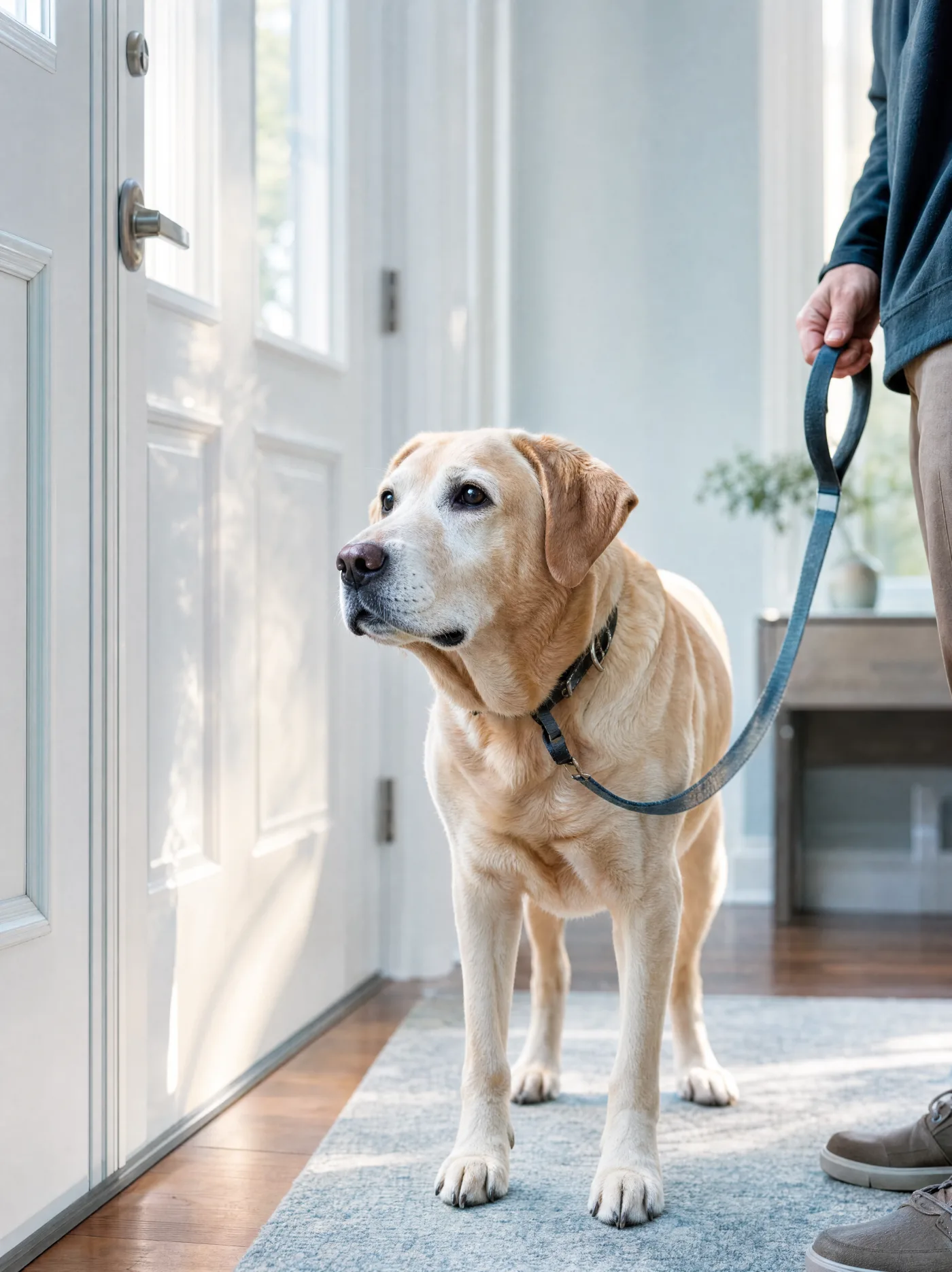
Senior Labrador
An older Labrador resting calmly on a sunlit floor at home.

Noticing changes over time

Owners see their dog every day, which makes gradual change genuinely hard to spot. A short monthly note — how they got up this morning, how long the walk was, how they settled afterwards — turns vague impressions into something you can compare. Photos and short videos of ordinary movement are often more useful to a veterinarian than a description from memory.

Mobility and daily routines

Stairs, slippery floors, jumping in and out of the car and getting up from a nap are the moments where change tends to appear first. Many households find that non-slip runners, a step or ramp, and steadier, more predictable walk lengths make daily life easier for an older dog. Any new limping, reluctance, stiffness or pain is a veterinary conversation, not something to manage at home.

Body condition and nutrition conversations

Weight and body condition affect nearly everything else about how a dog feels day to day. Your veterinary team can show you how to assess body condition by hand and tell you what a healthy range looks like for your particular dog. Diet changes for an older dog — including portion changes and any supplement — are worth discussing with them first rather than deciding from a social post.

Sleep and rest patterns

Older dogs often sleep more, and that alone is not a problem. Changes in the pattern are what tend to matter: restlessness at night, pacing, difficulty settling, waking confused, or sleeping through things that used to bring them running. Note when it started and how often it happens, and bring that to your vet.

Enrichment and connection

Slowing down physically does not mean a dog needs less engagement. Scent games, food puzzles, short familiar routes, gentle training and simply being included in the household keep older dogs interested in their day. Enrichment should always be scaled to what your dog can comfortably do.

Routine veterinary checkups

Regular checkups matter more as dogs age, because they establish what normal looks like for your dog before anything changes. Your veterinarian can advise how often your dog should be seen and what, if anything, is worth monitoring at this stage of life.

Questions worth bringing to your veterinarian

  • Is my dog's current weight and body condition in a healthy range?
  • Are the changes I've noticed in movement typical for this age, or worth investigating?
  • How often should we come in for checkups from here?
  • Is there anything I should be tracking at home between visits?
  • Is our current food and routine still a good fit for this stage of life?
  • Are there changes that would mean I should call you sooner rather than wait?

Get the Pet Wellness Guide

Join the PetWellnessLove list for the Red Flag Checklist and future evidence-aware guides for dog owners.

The PEPTAILS Brief

Research, canine wellness education, and updates from PEPTAILS — sent when we have something worth reading.

You choose to subscribe. Unsubscribe at any time.

Buy Pep-9